
Direct from Niigata, Japan
Import Batches
Each batch is hand-selected at the source and imported directly from Japan's finest koi farms. Browse by group to find the exact fish you are looking for.

Ueno-Showa
Showa (Sho-Ah) is the last of the Big Three varieties collectively known as Gosanke, and historically it's by far the youngest. It wasn't until 1927, in Niigata, when Jukichi Hoshino crossed a Ki Utsuri with a Kohaku that the first Showa came to be. These early fish displayed very poor, yellowish hi and indifferent sumi. Then, in 1965, Tomiji Kobayashi improved the strain by crossing a female Showa with a male Sanke and a male Kohaku. The resulting fry wore deep scarlet hi, glossy black sumi, and snow-white skin akin to those we appreciate today.
View batch→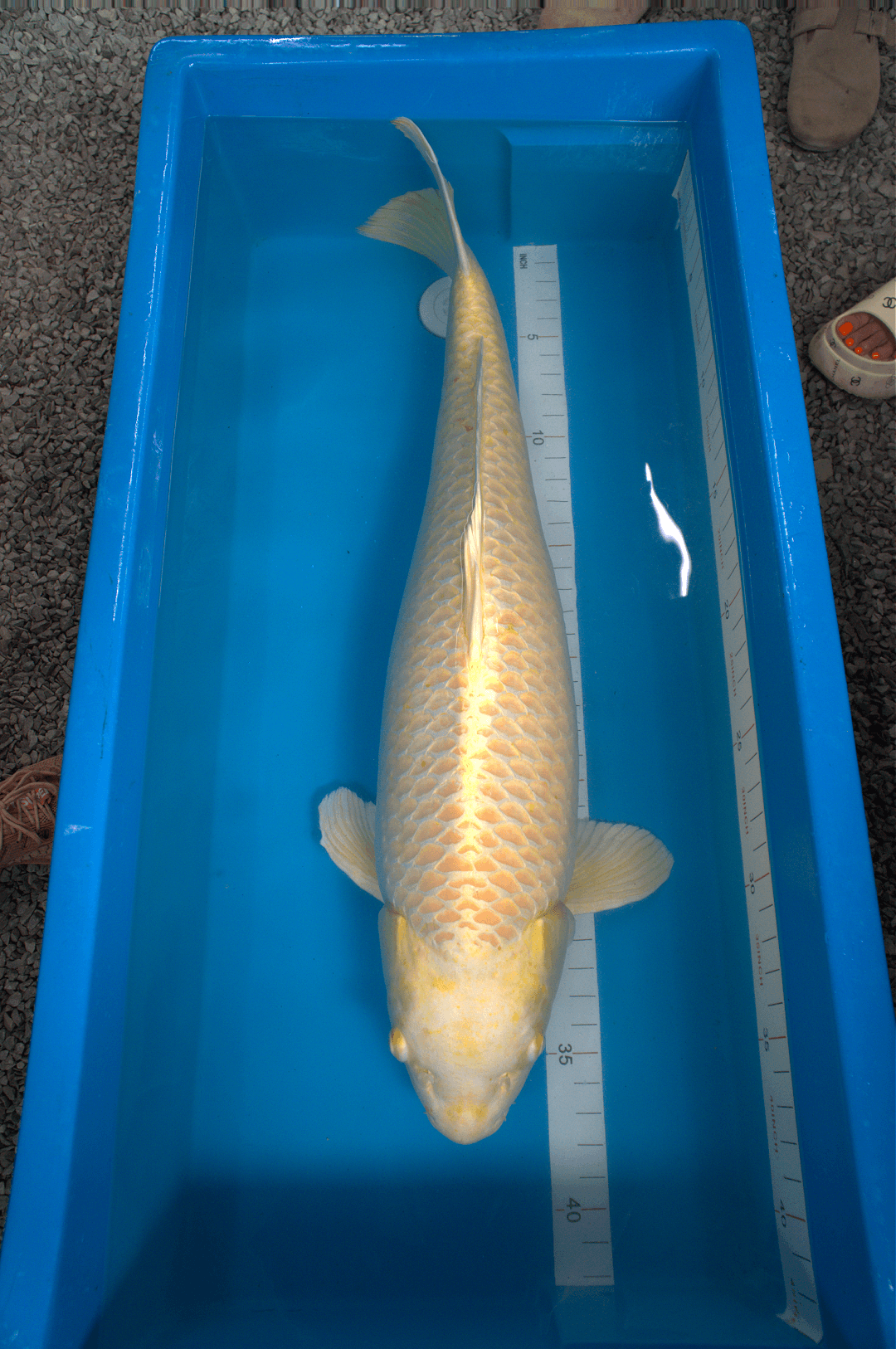
Izumiya-Yamabuki
Izumiya Koi Farm is best known for producing exceptional Yamabuki Ogon, the metallic yellow koi that has become a signature of the farm. These koi are recognized for their luminous, uniform color and impressive size, often exceeding 90 centimeters under proper conditions. The metallic sheen on Izumiya Yamabuki Ogon is clean and consistent, with strong body structure supporting the brilliance of the color. The combination of size, durability, and radiant finish has made Izumiya a global reference point for collectors seeking high-quality Hikarimono.
View batch→
Goshiki
This is probably the most diverse Koi variety known. Goshiki, meaning "five colored" in Japanese, are said to be five-colored Koi, although sometimes you'd be hard pressed to pick out the red, black, white, light blue, and dark blue color tones that are said to be available. Even further, a sixth color - purple - is formed when black and blue overlay one another. Goshiki have strong Asagi lineage, which lends a reticulation to some or all of the scales. The traditional Goshiki is a rather dark fish, with messy, indistinct patterning, sometimes relieved by clear patches of hi, especially on the face and back. Others look like straight Kohaku and Asagi crosses, with a black, netlike reticulation covering the whole body. Certain examples of Goshiki can be absolutely breath-taking. Gin-Rin Goshiki and Doitsu Goshiki add even more complexity to an already fathomless variety. Because the appearance of the reflective scales is influenced by the skin colors beneath, they can appear gold, silver, or bluish gray in a good Gin-Rin Goshiki. Often these combine in a single fish and the effect is almost unreal.
View batch→
Goromo
Ai Goromo are a striking koi variety known for a clean white base, red patterning similar to Kohaku, and blue-to-indigo reticulation over the red scales. In practical terms, they are ornamental koi bred for pattern and color quality rather than for a different personality or care style than other pond koi. Most Ai Goromo are peaceful, social fish that do best in groups and in stable ponds with strong filtration, good oxygenation, and enough room to grow. Like other koi, Ai Goromo can become large, long-lived fish. Many pet parents are surprised by how quickly young koi outgrow small ponds. Adult koi commonly reach roughly 14 to 25 inches, and some lines grow larger with time, so pond planning matters from the start. A common rule of thumb is about 250 gallons per adult koi, with pond depth often around 3 to 6 feet depending on climate. Temperament is usually calm and interactive. Healthy koi often learn feeding routines, gather at the pond edge, and tolerate compatible pond mates. Their beauty can make them feel delicate, but their long-term success depends less on color genetics and more on everyday basics: water quality, quarantine, nutrition, sanitation, and prompt veterinary attention when behavior changes.
View batch→
Taniguchi Showa
Special Showa breeder
View batch→
Golden-Corn
Golden Corn, renowned for its striking appearance, features several special variants, each exhibiting unique characteristics. The most iconic type boasts a vibrant yellow base adorned with intricate red lines across its scales, complemented by a dazzling Gin Rin finish that creates a shimmering effect. An ideal specimen showcases a distinct red speckled pattern known as kanoko (pronounced KAN-oh-KOH), enhancing the visual appeal of the red lines. In contrast, the other two variants present a grey-white base. One of these displays a vivid red-orange kanoko alongside red lines, while the other features a yellow tint in its kanoko and lines, creating a beautiful, unique allure.
View batch→
Doit Showa
As Doitsu koi were originally bred in Germany, “Doitsu” is the Japanese word for “German” or “Germany.” In the early 1900, scaleless koi were selectively bred in Germany from scaleless or partially scaled German carp, sometimes called mirror carp, to serve as an easy food source, and were imported to Japan and other countries, as well. This eliminated the need to have to scale fish before cooking and eating them. Eventually, this unique trait caught on and became desirable in pet koi fish, now known as Doitsu!
View batch→
Tancho-Showa
Koi with a red head patch are called “Tancho.” Most common are “Tancho Kohaku” (all-white Koi with Tancho), “Tancho Sanshoku” (white Koi with Sumi similar to Shiro Bekko, and with Tancho), and “Tancho Showa” (Showa Sanshoku without red markings except for Tancho), etc. However, “Tancho Goshiki” (Koi of five colors with Tancho), and “Tancho Hariwake” are rare. Tancho do not form a single, independent kind of Nishikigoi; they all can be bred from Kohaku, Taisho Sankshoku, or Showa Sanshoku. Their red patch happens to show up only in the head region. Tancho, therefore, can not be produced in bulk even if you so wish. The essential point for appreciation is the red patch in the head region, of course. The red head patch sitting right at the center of the head region is the best. The white skin is also important as it is the milky white color that sets the red head patch off to its advantage. The Sumi of Tancho Sanshoku and Tancho Showa are the same as Bekko and Shiro Utsuri respectively.
View batch→
Showa
Koi have been around for thousands of years, with modern koi carp breeding practices originating in Japan and China around approximately the 4th century. In fact, mtDNA sequencing supports the commonly held belief that koi are descendants of the common carp (Cyprinus carpio), which the sequencing found originated in East Asia. This idea was previously highly contested, and still sometimes argued despite mounting evidence. Since the 4th century (301 to 400 AD), there has been an explosion in the number of koi breeds, patterns, and colorations available thanks to the aquaculture industry. Indeed, the aforementioned DNA studies also determined that the large scale domestication of carp and subsequent breeding of them to obtain brightly colored varieties and unique patterns occurred in China beginning around 6,000 B.C. As a gesture of goodwill and peace, these colorful, specially bred carp were most often gifted to those with political and economic power. This is how they initially made their way to Europe and, eventually, the Americas, becoming beloved pets now known widely as “koi” rather than symbols of power and wealth. Showa Sanshoku, one of the gosanke or “big three” along with Kohaku and Taisho Sanshoku (Sanke) koi, came about in 1927. A breeder by the name of Jukichi Hoshino crossed a Kohaku (white and red coloration) with a ki utsuri (yellow with black bands). Showa didn’t gain much steam initially, as the yellow of the ki utsuri bestowed the resulting Showa offspring with dull, off-color reds and whites. It wasn’t really until the 1960’s when another breeder, Tomiji Kobayashi, paired his Showas with Kohakus possessing intensely red coloration, resulting in more attractive Showas now commonly known as Kobayashi Showa. This line is what most modern Showas are based off of, and is commonly referred to as the old style Showa
View batch→
Kujaku Omosako
Kujyaku is the peacock of koi, first bred by Mr. Nishi Hiranishi in 1960. The body of the Kujyaku is an Ogon, or metallic koi with a Matsuba netted pattern of indigo blue along the back. The red and white pattern similar of a Kohaku should have a good pattern throughout the koi.
View batch→
Asagi
Among the most ancient koi breeds is the Asagi. Renowned for its stoic and subdued nature, some even consider it an acquired taste. Despite being fully scaled and lacking metallic markings, the Asagi’s long history is sometimes overshadowed by its resemblance to the wild black carp, Magoi. Some hobbyists perceive them as unrefined or dull, not “proper” koi. Indeed, their understated elegance stands in contrast to the brilliantly colored Showa or flashy Hikariutsuri varieties. However, their quiet charm provides a beautiful counterpoint to their more vibrant pond mates. Additionally, Asagi have the potential to grow remarkably large.
View batch→
Ochiba
special breeder
View batch→
Kagane-Matsuju
Special breed
View batch→
Tancho-Sanke
Tancho Kohaku, Tancho Showa, and Tancho Goshiki are gorgeous snowy white koi with a large Hi marking on their heads. The position of the Hi marking is very important and should be well proportioned on just the head. The round Hi needs to cover as much area as possible between its eye and nose, without covering the eye or the nose. The edge must be sharp, and the coloration must be deep red. The Hi should not spread to the shoulders or back, and the white body should be free of any imperfections. Selecting top-quality Tancho koi fish requires careful attention to these details to ensure their beauty and value.
View batch→
Apple red Karashi
Torazo Koi Farm
View batch→
Kage Showa
The Kage Showa is a stunning twist on the classic Showa Sanshoku. Like all Showa, it features bold black sumi, rich red hi, and clean white shiroji across a balanced, three-color body. What makes the Kage Showa distinct is the netted, shadowed appearance on the white areas. This Asagi-like patterning, known as the kage effect, creates a smoky or reticulated texture over the shiroji, softening the transition between colors and adding quiet depth to the koi’s appearance. At Kyodai we carefully select Kage Showa Koi from top breeders like Dainichi and Shinoda, known for producing some of the finest bloodlines in Japan. Each fish is chosen for strong sumi placement, rich hi markings, and the signature reticulated netting across the white that defines the variety. The kage pattern is what gives this type of Showa its soft elegance and visual depth. This layered look creates a balance of bold contrast and subtle transitions, making every Kage Showa a standout. Shop our curated collection and bring home a Kage Showa that blends bold color with refined detail.
View batch→
Hi-utsuzri
Utsuri Utsuri (oot-SOO-ree): The Utsuri koi fish is a black-based koi possessing a white, yellow, or red banded patterning. This particular koi fish breed is known for three color variations, including the Shiro Utsuri (black and white), the Ki Utsuri (yellow and black), and the Hi Utsuri (red or orange and black). The most rare variation of Utsuri is the Ki Utsuri while the Shiro Utsuri is the most common. When looking for the most high-quality Utsuri koi fish, you should search for a fish that possesses an aesthetically pleasing checkerboard pattern and clearly defined colors. Much like the Showa variety of koi, Utsuri should have bands of color on the nose, face, throughout the body, and in the pectoral fin joints. The black pattern should start at either the mouth or the nose and be intermittently spaced all the way down to the base of the koi’s tail. Looking for a healthy Utsuri to add to your koi fish pond? We have Utsuri koi fish for sale that you will be proud to own for yourself! Check out our selection today and feel free to contact us with any questions. We’ll be happy to assist you in making the right selection for you!
View batch→
Shiro-utsuri
Shiro Utsuri koi may seem more basic with only black and white skin, however, the balance creates a beautiful effect that draws your eye and makes this koi stand out. This jet black koi should have a dazzling white pattern wrapped around its body.
View batch→
Kirin
Kirin koi are an emerging favorite among pond owners seeking something bold and distinctive. With their golden brown or yellow base color and deep contrasting patterns, Kirin are a product of crossing Kujaku with Nezu Ogon. The result is a koi that blends metallic shine with dark shading and unpredictable spotting, making every Kirin truly one-of-a-kind.
View batch→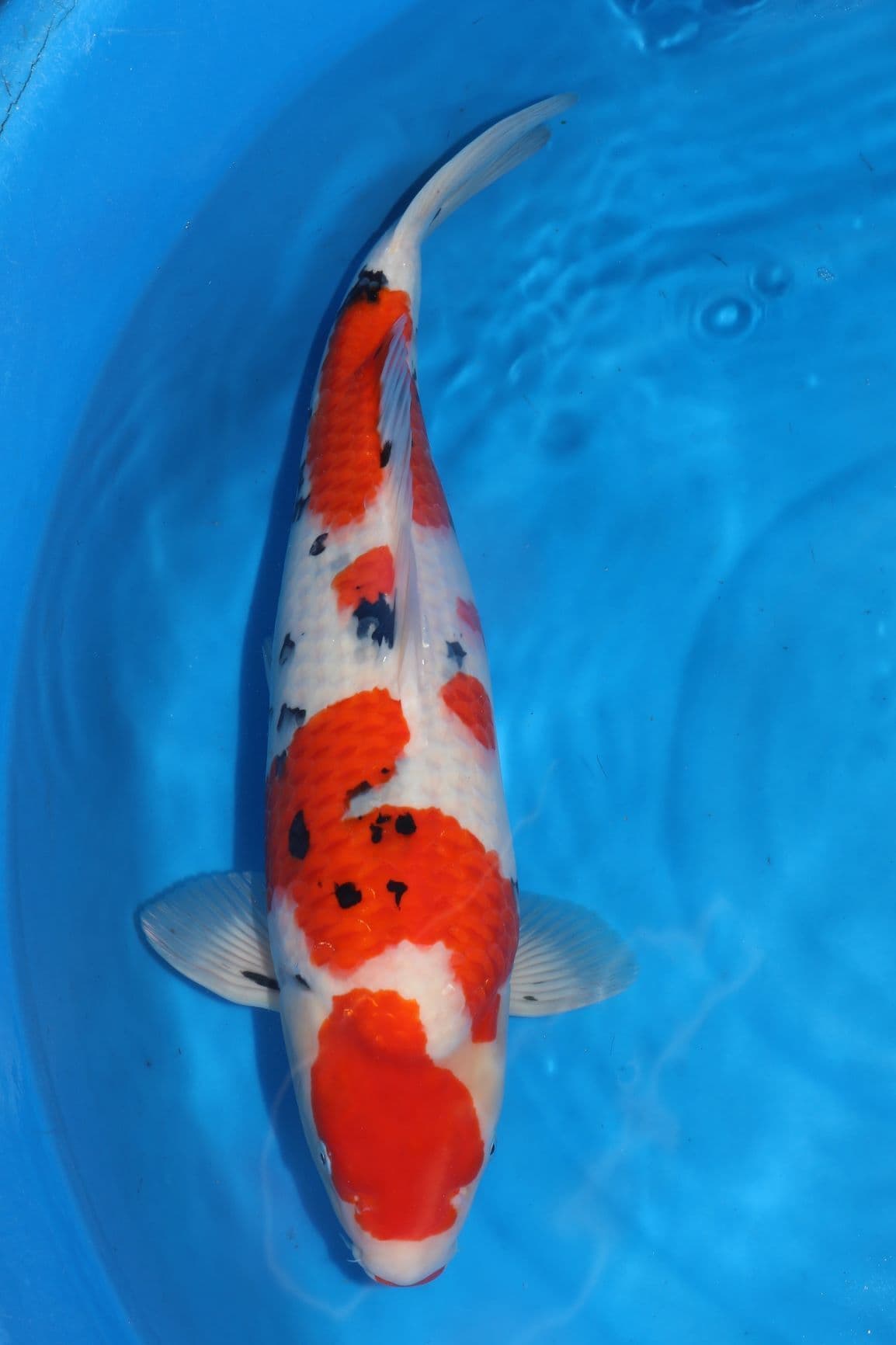
Sanke
Sanke koi, also known as Taisho Sanshoku, are a tri-colored variety of koi with a white base, red markings, and black accents, prized for their striking appearance and historical significance.
View batch→
Ginrin Showa
Kin-Gin-Rin (keen-geen-leen) is a reference to a koi’s scale type rather than the variety of koi, and literally means ‘golden silver reflective scales.’ Most generally, Kin Gin Rin is abbreviated to Gin Rin by koi breeders, sellers and koi hobbyists of today. Any koi variety can have Gin Rin scales, and what a brilliant enhancement the sparkly scales make. The addition of Gin Rin scales can transform an ordinarily plain koi into a stunning beauty. Gin Rin is highly reflective so that each scale glistens when it catches the light. It’s no wonder that koi are called Living Jewels.
View batch→
Ki-utsuri
Otsuka Koi Farm is considered one of the specialists in the cultivation of asagi in Japan and has been around since 1962. Otsuka is at the basis of the development of the goshiki showa and the goshiki sanke, which have already won several awards. There are many varieties on this farm worth taking a closer look at and the koi from Otsuka Koi Farm, run by Yoshikazu Otsuka, are known for being very strong and can take a beating.
View batch→
Kuhako
It has been said that koi keeping begins and ends with Kohaku KOI. The history of Kohaku koi fish dates back to the 19th century in Japan when the first red and white carp were discovered and bred selectively to enhance their vivid coloration and distinctive patterns.
View batch→
Ginrin-Chagoi
First, the fish should be big. Now, this doesn’t apply to the young fish, but you should be able to tell that the fish has been fat and robust all its life. As a young fish it should be an aggressive eater and it should be larger than all the other fish of the same age. As an adult, a Chagoi is prized most highly if it fulfills a destiny of great size – as much as 40 inches or more. That’s a big koi by any standard. The fish should be blocky in its body shape. The base of the tail (knuckle) should be thick and fat. The head and shoulders should be broad, and no part of the fish should be slender or streamlined. The pectorals should be large and paddle shaped, and there should be no splits in the fins or the dorsal fin. And the eyes of a Chagoi should be active and bright, with the corneas being crystal clear.
View batch→
Dainichi-Mona Lisa-Showa
The Dainichi (Mona Lisa) Showa is a highly prized koi variety from the legendary Dainichi Koi Farm in Ojiya, Japan, one of the world’s most respected Nishikigoi breeders Genki Koi. The “Mona Lisa” name is used to highlight the fish’s exceptional beauty and patterning, drawing a parallel to the iconic painting for its refined elegance
View batch→